

Back Pain Chiropractor in London, Ontario
Back pain has a way of taking over your life in ways you don’t expect. It’s not just the sharp moments that knock you off your feet, it’s the way it changes everything else. The way you sleep, how you sit at your desk, whether you can pick up your kids, whether you made it through a workout, whether you can just get through the day without thinking about it. If that sounds familiar, you’re in the right place.
At Riverside Chiropractic, back pain is the condition Dr. Ben Tucker sees and treats most often. Not because it’s the easiest problem to help with, but because it’s where he has spent the most time developing real clinical depth, and where patients consistently see meaningful results.

Why Back Pain Doesn’t Always Go Away on Its Own
Back pain is complicated. The same symptom, pain in the lower back, can come from a dozen different sources. A restricted spinal joint. A disc problem. A muscle that’s been overworking to compensate for something else. Nerve irritation. A postural pattern that’s been building for years. The reason so many people struggle with recurring back pain is that they treat the symptom without identifying the source, and the source keeps doing what it was doing.
Rest helps some people some of the time. Painkillers manage the sensation. But neither of those addresses the underlying reason the back is hurting in the first place. That’s where chiropractic care comes in, and specifically where a thorough assessment matters more than anything else.

Common Types of Back Pain Dr. Ben Treats
Lower Back Pain
The most common presentation at Riverside Chiropractic. Lower back pain can come on suddenly after a lift or a twist, or build slowly over months of sitting, standing, or moving in ways that load the spine unevenly. Either way, the assessment process helps identify exactly what’s driving it before any treatment begins.
Chronic Back Pain
Pain that’s been around for three months or more has often become self-reinforcing, the muscles guarding, the movement patterns changing, the nervous system sensitizing to the area. Chronic back pain responds well to chiropractic care, but it usually requires a more systematic approach than an acute injury. Dr. Ben’s progress exam model is particularly well suited to chronic cases because it tracks objective improvement over time rather than relying on how you feel on a given day.
Disc-Related Back Pain
Disc herniations, bulges, and degenerative disc changes can all cause significant pain and sometimes radiating symptoms into the leg. Chiropractic care including specific adjustments, soft tissue work, and targeted exercises can provide meaningful relief for many disc-related presentations without surgery or medication.
Mid-Back Pain
Often overlooked in favor of the lower back, midback pain is frequently tied to posture, prolonged sitting, and restrictions in the thoracic spine. It’s also a common contributor to shoulder pain and headaches that patients don’t always connect to the back.
Muscle Strains and Sprains
Acute muscle strains from lifting, twisting, or sudden movements are a frequent reason patients come in for a first visit. With the right assessment and early intervention, most muscle-related back injuries respond quickly and well to chiropractic care combined with soft tissue therapy.
How Dr. Ben Approaches Back Pain
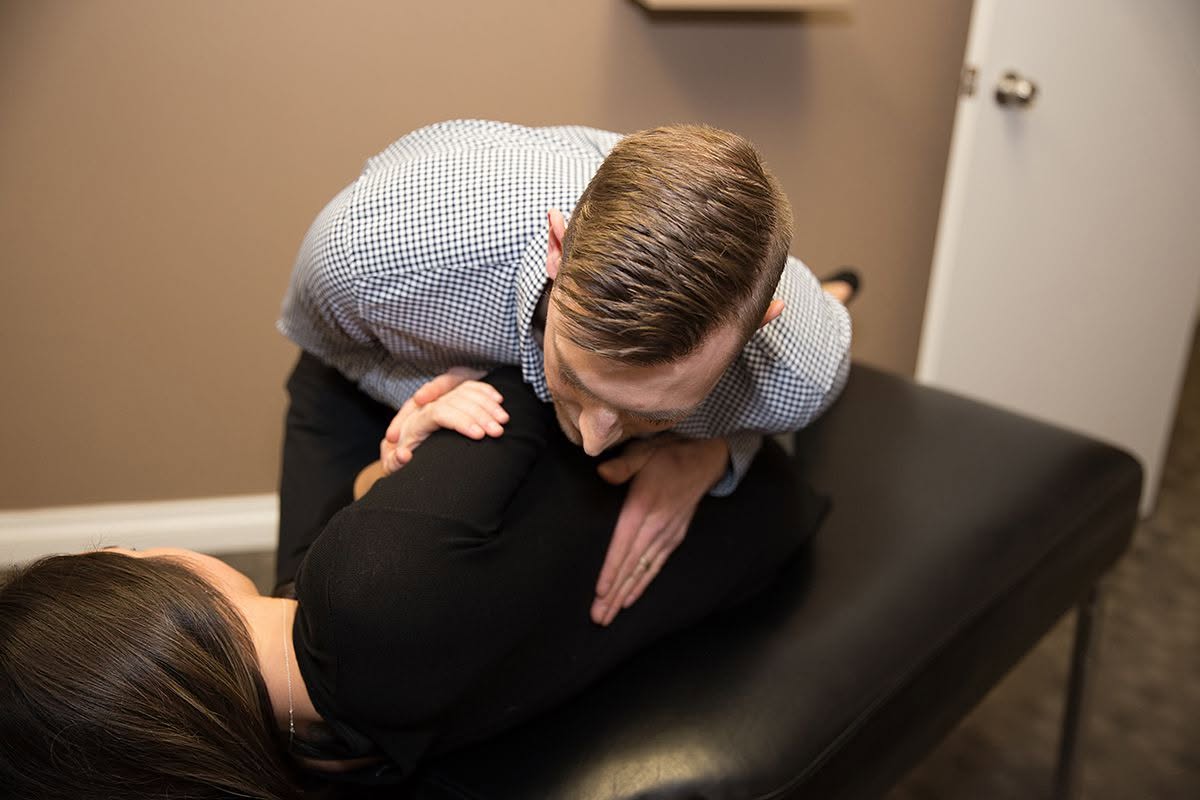
Every patient at Riverside Chiropractic starts the same way, with a real assessment. Not a quick question-and-answer and straight to the table. Dr. Ben uses the EXSTORE Orthopedic System as part of a comprehensive evaluation that includes orthopedic and strength testing, range of motion assessment, joint movement analysis, spinal tension scans, and digital postural assessment. The goal is to build a clear picture of what’s actually driving the pain before deciding how to address it.
From there, Dr. Ben explains what he found in plain language and outlines a personalized care plan that may include:
- Chiropractic adjustments using Diversified technique, Activator, drop table, or joint mobilization depending on what fits
- Soft tissue therapy to address the muscles and connective tissue surrounding the problem area
- A home exercise program with private video instructions tailored to your specific condition
- Progress exams at a defined point in care to confirm the plan is working using the same objective measures from the initial assessment
That last piece matters more than people realize. A lot of back pain patients have been told to just keep coming in with no clear endpoint and no objective way to measure whether things are improving. At Riverside, the progress exam is built into the care plan from the beginning. You’ll always know where you stand.
What to Expect at Your First Visit
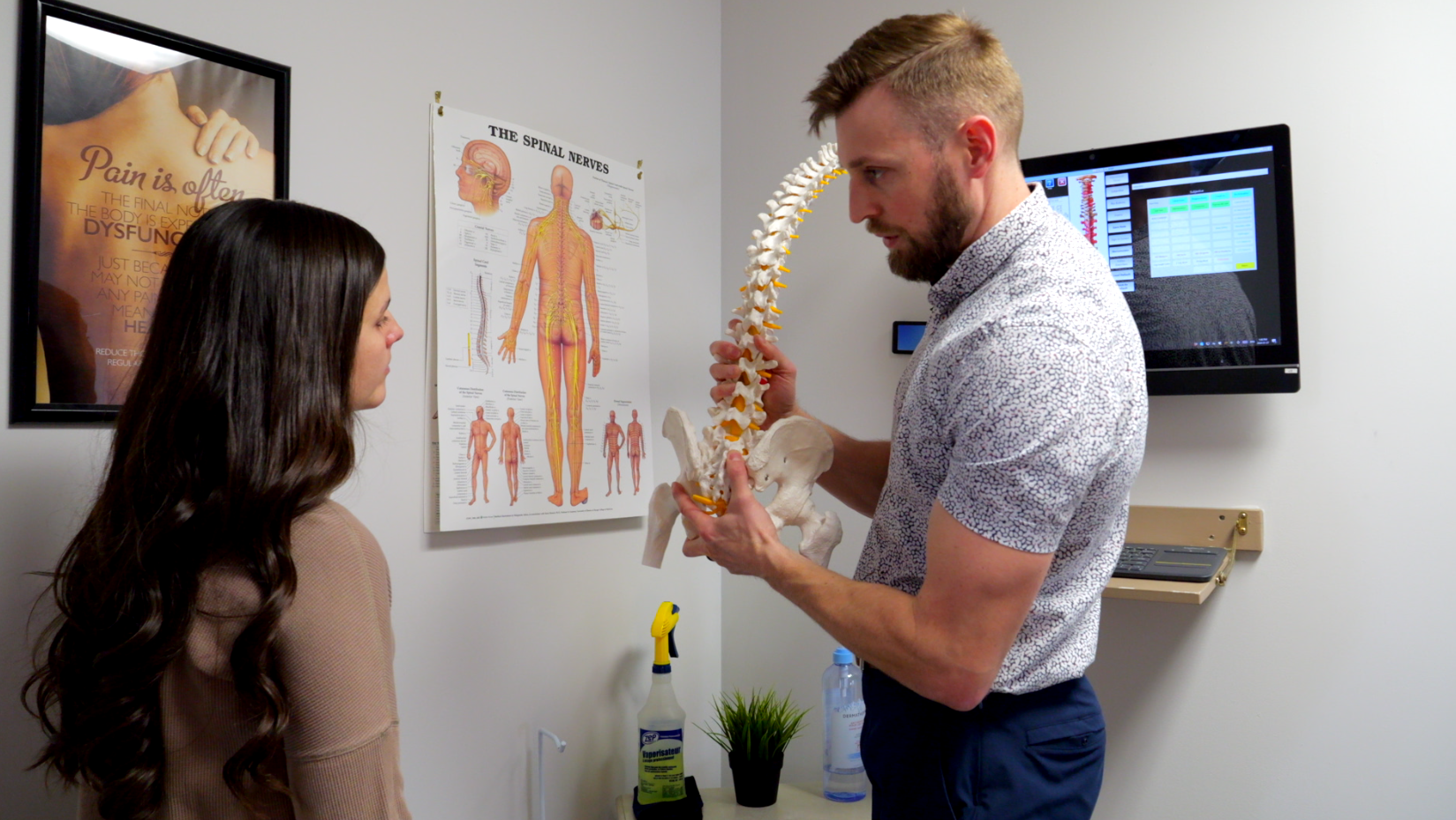
If you’re coming in for back pain, here’s what the first visit looks like. You’ll complete intake forms ahead of time so Dr. Ben can review your history before you arrive. The visit begins with a conversation about what’s going on, how long it’s been happening, what makes it better or worse, and what you’re hoping to get out of care.
From there, the assessment covers spinal tension scans, digital postural analysis, orthopedic testing, range of motion, and hands-on joint movement assessment. Dr. Ben explains the findings clearly and walks you through the recommended care plan before anything starts. If you’re a good candidate for care, treatment typically begins the same day.
No referral is needed, and new patients are always welcome.
Frequently Asked Questions