
TMJ and Jaw Tension Treatment in London, Ontario
Jaw tension has a way of showing up everywhere. A sore jaw when you wake up, a click or pop when you open wide for a sandwich, an ache in front of your ear that builds through a long day at a screen. Dr. Ben helps people in London, Ontario figure out why their jaw feels tight, sore, or stuck, and whether the real driver is the jaw itself or something nearby, like the neck and upper back.
Every new patient with jaw complaints starts with the same assessment first approach Dr. Ben uses with everyone at Riverside Chiropractic. Before any treatment, he looks at how your jaw opens and closes, how your neck and upper back move, and how you hold your head through the day, because the jaw rarely works on its own.

TMJ and Why Jaw Tension Is Not Always a Jaw Problem
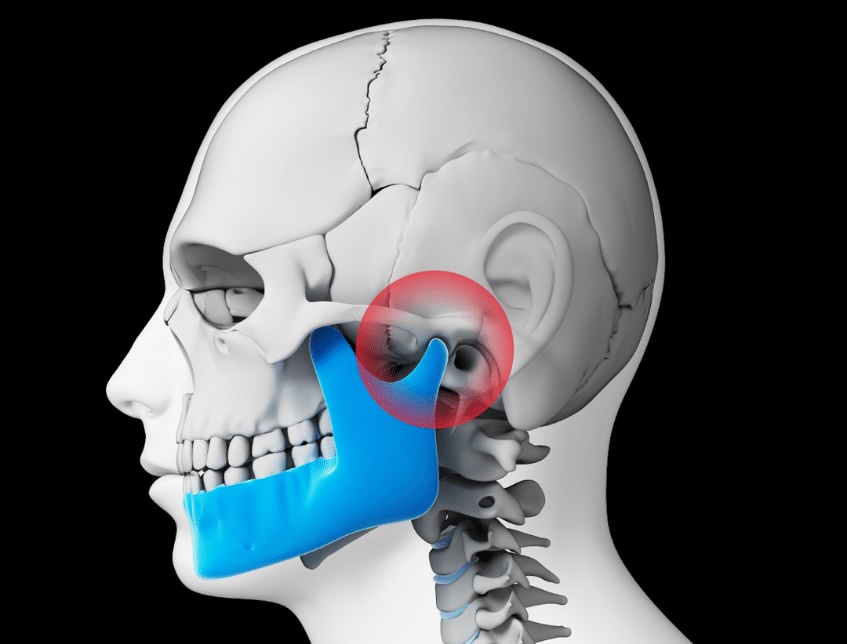
TMJ stands for temporomandibular joint, the hinge on each side of your face just in front of your ears. Every time you talk, chew, or yawn, those joints and the muscles around them are working. When they get irritated or overworked, people notice a dull ache near the ear, tightness in the cheek or temple, clicking or popping, or a jaw that tires quickly when they eat. Plenty of people use “TMJ” as shorthand for all of it, and that is perfectly fine.
The jaw is also closely connected to the neck. The muscles that move your jaw share the load with the muscles of your neck and upper shoulders, so when your head drifts forward over a keyboard or phone, or you clench through a stressful day, the whole area can get tight together. Joint restrictions in the upper neck and upper back can add to that tension, which is why looking only at the sore spot can miss part of the picture.

What Patients Describe
People come in with a jaw that feels sore or tight first thing in the morning, clicking or popping when they open wide, an ache near the ear, or trouble chewing tougher foods without the jaw tiring. Many also notice tension that spreads into the temples, neck, and shoulders. Tension around the temples can overlap with headaches, and ongoing neck pain often travels with jaw tension, so Dr. Ben pays attention to the whole picture instead of treating each complaint on its own.
How Dr. Ben Approaches Jaw Tension
Care is built around what the assessment finds. That may include chiropractic adjustments or gentle joint mobilization for restricted areas in the neck and upper back, along with soft tissue therapy for tight muscles around the neck, shoulders, and jaw. Dr. Ben uses a variety of techniques, and low force options like the Activator Method are available if you prefer a lighter touch or the area is too sore for anything firm.
Jaw problems are often a team effort. If clenching, grinding, or a bite problem looks like a big part of the picture, a dentist may need to be involved, and Dr. Ben will tell you directly rather than promise that chiropractic care can fix everything. What he can do is address the joint and muscle side of the problem and give you a clear way to see whether it is improving.
Habits, Home Exercises, and Tracking Progress
Jaw tension is often fed by small things repeated all day: clenching while you concentrate, constant gum chewing, or hours of forward head posture at a screen. Dr. Ben will go over which habits apply to you, and many patients get short home exercise videos so they can practice what they were shown correctly between visits.
Jaw tension can ease for a day or two and then return, so how it feels on any given morning is not a reliable guide. Progress exams and outcome tracking let you and Dr. Ben see whether your comfort and movement are genuinely improving, rather than guessing.
When Jaw Pain Needs Different Care
Not all jaw pain comes from the jaw. If jaw pain comes with chest pain, shortness of breath, sweating, or pain spreading into your left arm, call 911 or go to emergency care right away. A jaw that is locked open or locked shut, swelling in the face or jaw, a fever, or pain after a blow to the face or a fall also needs medical or dental care before chiropractic care. Dr. Ben will tell you directly if your symptoms point somewhere other than the jaw and neck.
Frequently Asked Questions

Ready To Get Started?
If jaw tension is getting in the way of eating, sleeping, or getting through your day, New Patients Start Here. No referral needed, and new patients are always welcome.
Payment is accepted by cash, debit, Visa, or Mastercard. We don’t offer direct billing, but we provide receipts for EHB self-submission. We do not accept WSIB, MVA, or litigation cases.