Lat & QL Doorway Stretch
A Simple Mobility Drill for the Shoulder Blade, Lats, and Low Back
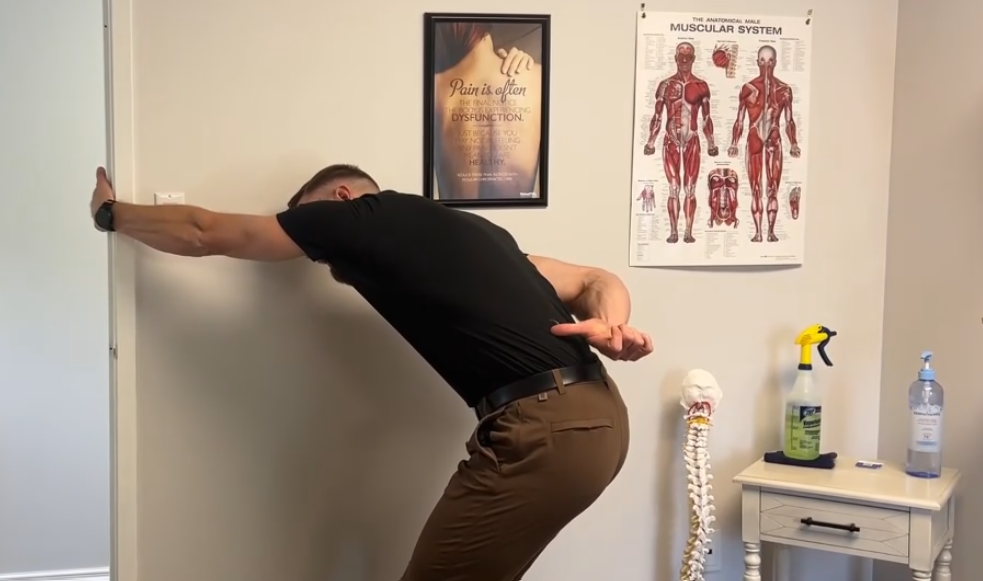
The Lat & QL Doorway Stretch is an easy but highly effective mobility exercise that targets the large chain of muscles running from the upper shoulder down into the side of the lower back and pelvis.
This stretch is especially useful for people who experience:
- Tight lats from lifting, CrossFit, climbing, or desk work
- Stiffness around the shoulder blade
- Side low back tightness
- Limited overhead mobility
- Pulling tension into the hips or pelvis
- Difficulty getting into strong front rack or overhead positions
Because the latissimus dorsi connects through the thoracolumbar fascia into the lower back region, improving mobility here can often reduce tension both in the shoulders and the low back at the same time.
What Muscles Does This Stretch Target?
The primary muscles involved are:
- Latissimus dorsi (lats) — large pulling muscles running from the upper arm into the mid and low back
- Quadratus lumborum (QL) — deep low back stabilizer on the sides of the spine
- Teres major and surrounding shoulder blade musculature
- Thoracolumbar fascia and connective tissue through the rib cage and pelvis
This combination makes the stretch particularly effective for athletes and active adults who spend a lot of time pulling, pressing overhead, or sitting.
How to Perform the Lat & QL Doorway Stretch
Step-by-Step Instructions
- Stand beside a doorway or sturdy vertical frame.
- Grab the door frame with one hand at approximately shoulder height.
- Step your feet slightly away from the doorway.
- Lean your body weight backward while keeping your arm straight.
- Allow your hips to shift slightly away from the arm being stretched.
- You should feel a stretch through:
- the side of the rib cage
- underneath the armpit
- around the shoulder blade
- into the side of the low back
- To emphasize the upper shoulder blade region:
- tuck your chin slightly
- look down toward your armpit
- Hold the position while breathing slowly and deeply.
Repeat on the opposite side if needed.
What Should You Feel?
A good stretch usually feels like:
- Broad tension through the side body
- Pulling underneath the armpit
- Gentle stretch into the low back or pelvis
- Mild opening through the ribs and shoulder blade
You should not feel:
- Sharp shoulder pain
- Pinching in the front of the shoulder
- Numbness or tingling
- Aggressive low back pain
If you do, reduce the angle or intensity.
Recommended Hold Times
Beginner
- Hold for 15 seconds
- Rest briefly
- Repeat 2–3 times per side
Intermediate
- Hold for 20–30 seconds
- Perform 2–4 rounds
Advanced Mobility Work
- Hold for 45–60 seconds
- Focus on slow breathing and relaxation
How Often Should You Do It?
This stretch responds very well to frequent exposure.
General Mobility
- 1–2 times daily
Athletes & Lifters
- Before overhead training
- After pulling workouts
- During warm-ups or cooldowns
Desk Workers
- Every few hours during long sitting periods
Consistency matters more than intensity.
Common Mistakes
1. Shrugging the Shoulder
Keep the shoulder relaxed instead of jammed upward.
2. Twisting Too Aggressively
You want a stretch, not a rotational crank through the spine.
3. Leaning Only From the Arms
Allow the hips and torso to shift backward to lengthen the tissue chain.
4. Holding Your Breath
Slow breathing helps the nervous system relax into the stretch.
Progressions
Once the basic stretch feels comfortable, you can progress it in several ways.
Progression 1 — Hip Shift Emphasis
Shift the hips farther away from the doorway while keeping the arm long.
This increases the stretch into:
- QL
- obliques
- thoracolumbar fascia
Best for:
- Side low back tightness
- Rotational athletes
- Sitting-related stiffness
Progression 2 — Overhead Reach
Grab the doorway slightly higher than shoulder level.
This increases emphasis on:
- upper lats
- triceps
- serratus region
Best for:
- Overhead athletes
- CrossFitters
- Swimmers
Progression 3 — Rotational Variation
While leaning back:
- gently rotate your chest away from the arm
This can expose tighter fascial restrictions through the ribs and upper back.
Use lightly and avoid forcing range.
Progression 4 — Breathing Expansion
While in the stretch:
- inhale deeply into the rib cage
- exhale slowly for 5–6 seconds
This helps:
- improve rib mobility
- reduce guarding
- deepen relaxation
Excellent for recovery sessions.
Regressions (If the Stretch Feels Too Intense)
Option 1 — Reduce Lean
Stay more upright and use less body weight.
Option 2 — Bend the Elbow Slightly
Reduces shoulder stress.
Option 3 — Lower the Hand Position
Can feel more comfortable for irritated shoulders.