
For a lot of people, the decision to book a first chiropractic appointment takes longer than it should. Not because they don’t think it will help. Not because they can’t find a clinic. But because they don’t know what’s going to happen when they get there, and the uncertainty is enough to keep pushing the decision off.
Will they crack my neck? Will it hurt? What if they find something serious? Do I need to bring anything? How long will it take? What if I don’t like what they recommend?
These are reasonable questions and they deserve straightforward answers. This post walks through exactly what a first chiropractic appointment looks like at Riverside Chiropractic in London, Ontario, from the moment you book to walking out the door after your first visit.
Ready to Book? New Patients Start Here
Before You Arrive
Once you’ve booked your appointment online through JaneApp or by calling 519-681-8048, you’ll receive intake forms to complete before your visit. These cover your health history, the specific issue that brought you in, any previous injuries or treatments, and your goals for care.
Filling these out ahead of time matters because it means Dr. Ben has already reviewed your situation before you walk through the door. Your first visit isn’t spent on paperwork. It’s spent on you.
Wear comfortable clothing that allows easy access to the area you’re coming in for. If it’s a lower back issue, athletic pants or loose fitting clothing works well. If it’s a neck or shoulder issue, a shirt that’s easy to move in is fine. You don’t need to bring anything special, and you don’t need a referral.
When You Arrive
Riverside Chiropractic is located at 110 Riverside Dr., Suite 104 in London’s Old South neighbourhood. Parking is available directly at the clinic so you’re not hunting for a spot before your appointment.
The clinic is relaxed and unhurried. You won’t be sitting in a crowded waiting room watching a clock. First appointments are scheduled with enough time to do the assessment properly, which means you’re not being rushed through to make room for the next person.
The Conversation First
Before anything physical happens, Dr. Ben sits down with you. He’s already reviewed your intake forms, but this is the part of the visit where he understands the full picture in your own words.
He’ll ask about the specific issue you came in for: where exactly it hurts, when it started, what makes it better or worse, whether it’s happened before, what you’ve already tried, and how it’s affecting your daily life. He’ll also ask what you’re hoping to get out of care, because a patient who wants to get out of acute pain has different goals than one who wants to be back playing hockey in three weeks or manage a chronic issue that’s been going on for years.
This conversation isn’t a formality. It directly shapes what the assessment focuses on and what the care plan looks like. Take your time with it.
The Assessment
After the conversation comes the assessment, and this is what makes a first visit at Riverside different from walking into a clinic and getting adjusted on day one.
Dr. Ben uses the EXSTORE Orthopedic System as part of a comprehensive evaluation that includes:
Spinal tension scans: Technology-based scans that measure tension patterns in the spine and provide objective baseline data that can be re-tested at your progress exam to confirm improvement.
Digital postural analysis: An assessment of your posture and how imbalances in the way you hold yourself may be contributing to your symptoms.
Range of motion testing: Measuring how far and how freely the affected joints move compared to normal ranges.
Orthopedic and neurological testing: Hands-on tests that help identify which structures are involved, whether there’s nerve irritation present, and how significant the issue is.
Joint movement assessment: A hands-on evaluation of how the individual joints of the spine and surrounding areas are moving, identifying restrictions that aren’t always obvious from symptoms alone.
The assessment is thorough but not uncomfortable. Dr. Ben explains what he’s doing as he goes and answers questions throughout.
The Findings and the Plan
Once the assessment is complete, Dr. Ben explains what he found. Not in clinical jargon that leaves you nodding along without understanding. In plain language that actually makes sense.
You’ll understand what’s going on, why it’s happening, and what the recommended plan is to address it. The plan will include how many visits are recommended, at what frequency, and what the goal is at each stage. There’s a defined progress exam built into the plan so you’ll know exactly when Dr. Ben will re-test your condition using the same measures from today’s assessment to confirm things are improving.
You’ll also get a home exercise program with private video instructions tailored to your specific situation. These aren’t generic exercises from a handout. They’re specific to what the assessment found and what your body needs between visits.
If chiropractic isn’t the right fit for what you came in with, Dr. Ben will tell you directly and point you toward the right next step. That honesty is part of how the practice works.
The First Treatment
If you’re a good candidate for care, treatment typically begins the same day as your assessment. You won’t leave empty-handed after your first visit.
Treatment may include one or more of the following depending on what the assessment showed:
Chiropractic adjustments: Hands-on adjustments to restore proper movement to restricted joints. Dr. Ben uses several techniques including Diversified, Activator, drop table, and joint mobilization depending on what fits your situation and your comfort level. You can read more about the techniques used at Riverside if you want to understand what each one involves before your visit.
Soft tissue therapy: Hands-on work on the muscles, ligaments, and connective tissue surrounding the problem area when muscle involvement is present.
Medical acupuncture: Used alongside adjustments when clinically appropriate for certain presentations.
Before any treatment begins, Dr. Ben explains what he’s going to do and why. You’ll know what to expect before it happens, not after.
What the Adjustment Actually Feels Like
This is the part most people are most nervous about, and it’s worth addressing directly.
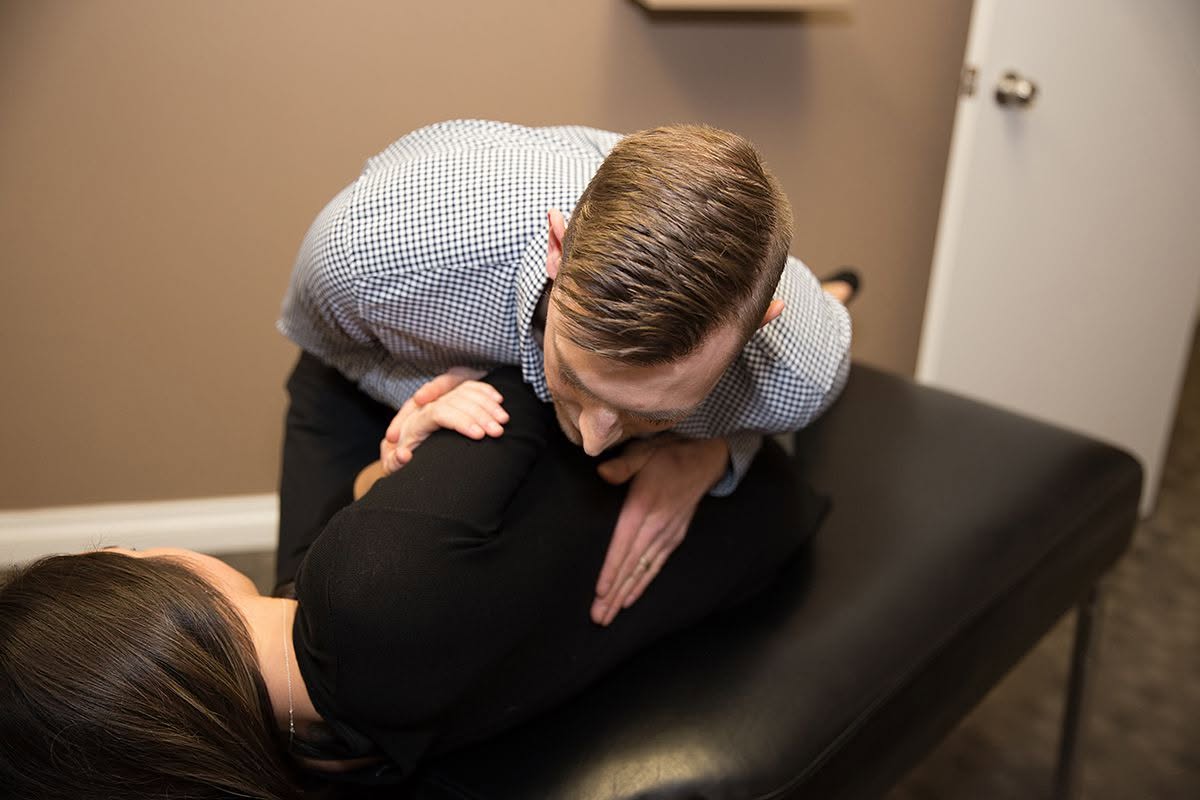
A chiropractic adjustment is a precise, controlled movement applied to a specific joint to restore normal motion. Some adjustments produce an audible pop or crack. That sound is simply a shift in pressure within the joint and is harmless. Not all adjustments produce the sound, and the presence or absence of it doesn’t indicate whether the adjustment was effective.
Most patients describe the adjustment itself as feeling like a release of pressure or tension. Some feel immediate relief. Others feel mild muscle soreness for a day or two afterward, similar to how you might feel after a new workout, as the surrounding muscles adjust to the change in joint position. Dr. Ben will tell you what to expect after your first treatment so nothing catches you off guard.
If you’re nervous about cervical adjustments specifically, that’s a completely reasonable thing to raise. Dr. Ben uses gentler options including Activator and joint mobilization for patients who prefer to avoid high-velocity manipulation. You’re always in control of what happens and what doesn’t.
Walking Out the Door
When you leave your first appointment at Riverside Chiropractic, you’ll have a few things that most patients don’t leave their first chiropractic visit with:
A clear understanding of what’s actually going on with your body. A specific care plan with a realistic timeline. A home exercise program with video instructions you can follow between visits. A scheduled progress exam date so you know when your condition will be objectively re-evaluated. And hopefully, if treatment began today, some initial relief or at least the beginning of it.
You won’t be handed a package of 40 prepaid visits. You won’t be pressured to commit to anything beyond what the plan recommends. And you won’t leave more confused than when you walked in.
If you want to understand more about what makes Riverside’s approach different before you book, the best chiropractor in London Ontario page covers that in more detail. Or if you want to read what patients say about their experience, our post on what 587 five-star reviews actually tell you about a chiropractor is a good place to start.
No referral is needed. New patients are always welcome.
Book Your First Appointment at Riverside Chiropractic
Frequently Asked Questions
Do I need a referral for my first chiropractic appointment?
No. You can book directly online through JaneApp or by calling 519-681-8048. No referral from a doctor is required.
How long does a first chiropractic appointment take?
First appointments at Riverside Chiropractic are longer than follow-up visits because they include the full assessment and care plan review. Plan for approximately 45 to 60 minutes for your first visit.
Should I be nervous about my first chiropractic adjustment?
It’s normal to feel uncertain before a first adjustment. Dr. Ben explains what he’s going to do and why before anything starts, and always works within your comfort level. Gentler techniques are available for patients who prefer to avoid high-velocity manipulation. Most patients leave their first visit wondering why they waited so long.
What should I wear to my first chiropractic appointment?
Comfortable clothing that allows easy access to the area you’re coming in for. Athletic pants or loose fitting clothing for lower back issues. A comfortable shirt for neck or upper back issues. You don’t need to bring anything special.
Will I get treated on my first visit?
If you’re a good candidate for care, yes. Treatment typically begins the same day as your assessment at Riverside Chiropractic so you’re not leaving empty-handed after your first visit.
What if I’m not sure chiropractic is right for me?
That’s exactly what the assessment is for. Dr. Ben evaluates your situation thoroughly and gives you an honest answer about whether chiropractic is a good fit. If it isn’t, he’ll tell you directly and point you toward the right next step. There’s no pressure to commit to a care plan before you understand what’s going on.
How soon will I feel better?
It depends on the condition, how long it’s been present, and how your body responds. Some patients notice improvement after the first visit. Others take several sessions before significant change occurs. Dr. Ben outlines a realistic timeline after your assessment and tracks progress with objective measures so you’re never just guessing whether things are improving.