

Hip Pain Chiropractor in London, Ontario
Hip pain has a way of getting into everything. Climbing stairs, getting out of the car, rolling onto your side at night, walking the dog, or standing up after a long meeting. Dr. Ben helps people in London, Ontario figure out why their hip hurts, not just where, because the sore spot is often only part of the story.
Every new patient with hip pain starts with the same assessment first approach Dr. Ben uses with everyone at Riverside Chiropractic. Before any treatment, he looks at how your hip, pelvis, and lower back move together, and how you walk, stand, and get up from a chair, so care is aimed at the cause instead of only the symptom.
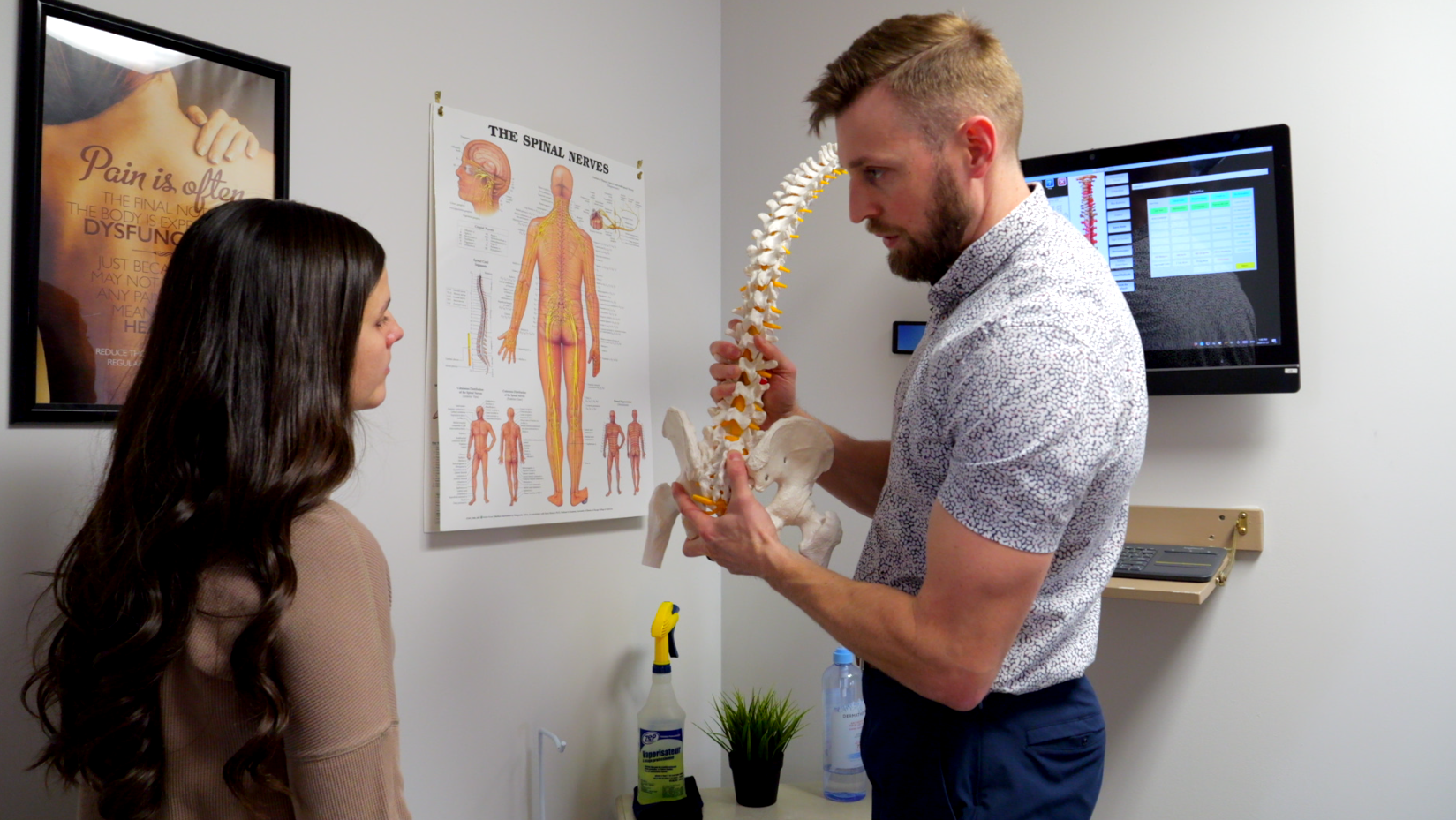
Why Hip Pain Is Often More Than a Hip Problem
Your hip joint sits between your pelvis and your thigh, and it depends on the lower back and pelvis to move well. When the joints in your lower back or the sacroiliac joints at the base of your spine get stiff, the hip can end up working harder to make up for it. Long days of sitting add to this, since tight hip muscles and sleepy glutes change how the whole area shares the load. That is why hip pain so often shows up alongside back pain, and why looking only at the hip can miss part of the picture.
Common Hip Complaints Dr. Ben Sees
Where you feel hip pain says a lot. An ache on the outside of the hip that flares when you lie on that side is a common one. Pain in the buttock or deep in the hip after sitting, stiffness when you first stand up, or a pinching feeling when you pull your knee toward your chest are also familiar. Pain that travels from the lower back through the buttock and down the leg may be sciatica rather than a hip problem, which is exactly why the assessment matters. Runners, hockey and soccer players, and anyone who trains hard also bring in hip strains, which ties closely into sports chiropractic care.

How Dr. Ben Treats Hip Pain
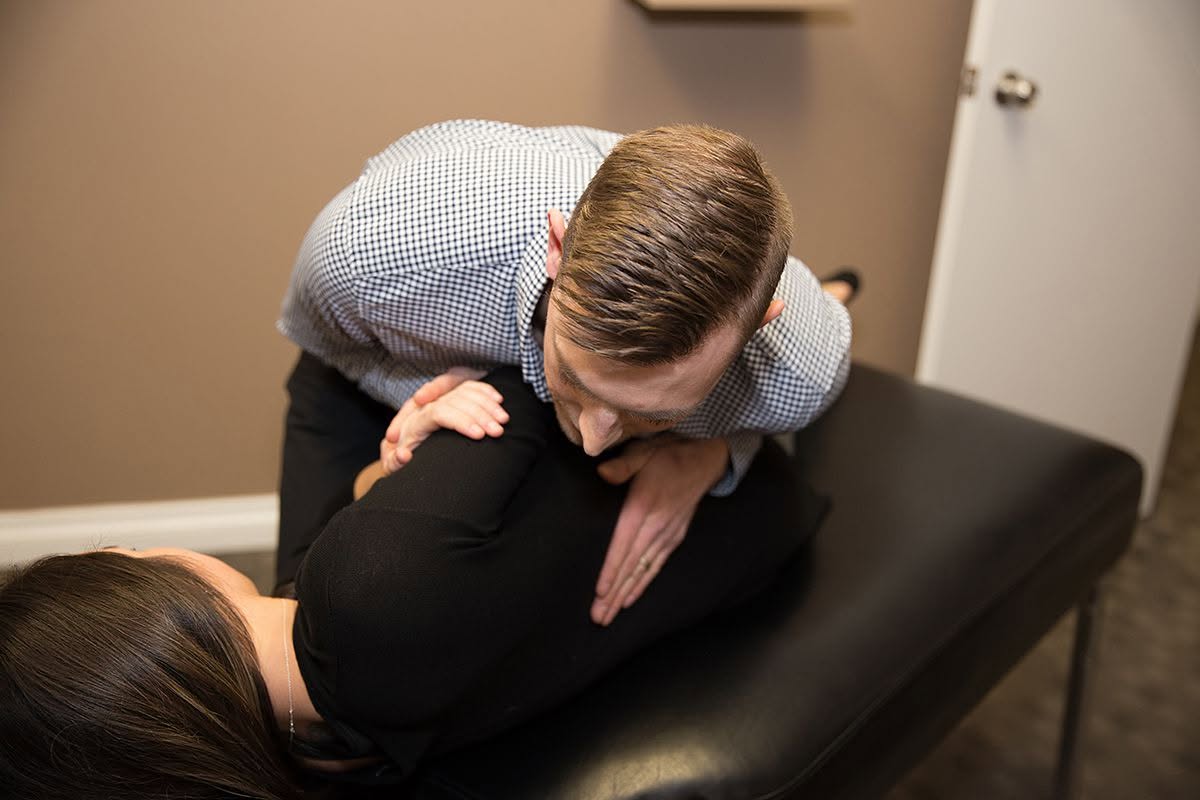
Care is built around what the assessment finds. That may include chiropractic adjustments to the lower back, pelvis, or hip where joint restrictions are limiting movement, along with soft tissue therapy for the tight muscles around the hip and glutes. Dr. Ben uses a variety of techniques, and low force options like the Activator Method are available if you prefer a lighter touch or the area is too sore for anything firm. For stubborn tendon pain on the outside of the hip that has not settled with other care, shockwave therapy may be worth discussing.
Rehab exercises are a big part of lasting results. Hips tend to feel better and then flare up again when the muscles that support them stay weak or tight, so Dr. Ben gives you specific exercises matched to what the assessment found. Many patients also get short home exercise videos so they can do them correctly between visits.
Tracking Whether It Is Actually Getting Better
Hip pain can ease for a few days and then return, so how it feels on any given day is not a reliable measure. Progress exams and outcome tracking let you and Dr. Ben see whether your comfort, movement, and everyday function are genuinely improving, rather than guessing.
When Hip Pain Needs Different Care
Some hip pain is not a muscle or joint problem. If you have had a fall or accident and cannot put weight on your leg, or the hip looks out of place, go to emergency care. A hot, swollen, red joint with a fever, or hip and groin pain together with numbness between your legs or trouble controlling your bladder or bowels, also needs urgent medical attention. Dr. Ben will tell you directly if your hip needs imaging or a referral to another provider.
Frequently Asked Questions

What to Expect at Your First Visit
If hip pain is getting in the way of walking, sleeping, or the activities you love, New Patients Start Here. No referral needed, and new patients are always welcome. Payment is accepted by cash, debit, Visa, or Mastercard. We don’t offer direct billing, but we provide receipts for EHB self-submission. We do not accept WSIB, MVA, or litigation cases.